


Drivalia and Villa Medici: a new partnership dedicated to sustainable mobility and culture
Drivalia, the rental and mobility company of the Crédit Agricole Auto Bank Group, announces the launch of a collaboration with the French Academy in Rome – Villa Medici.
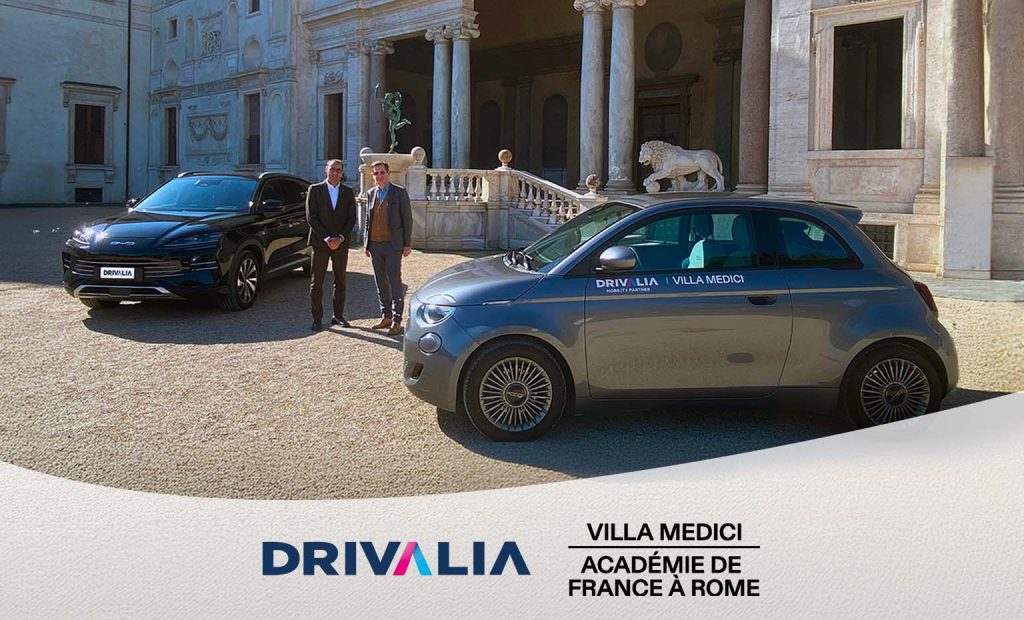
- The agreement aims to integrate low environmental impact mobility solutions into the institutional activities of the French Academy in Rome.
Drivalia, the rental and mobility company of the Crédit Agricole Auto Bank Group, announces the launch of a collaboration with the French Academy in Rome – Villa Medici. As Mobility Partner, Drivalia will support the Academy’s daily activities and institutional projects by providing a fleet of latest-generation electrified vehicles.
This partnership arises from a shared commitment to protecting beauty and promoting responsible innovation.
Founded in 1666 by Louis XIV and located on the Pincio Hill, Villa Medici is not only a masterpiece of Mannerist architecture but also a vital centre for European artistic creation and research. In this context, the vehicles provided by Drivalia will offer logistical support for the Academy’s missions, from hosting artists and researchers in residence to maintaining the architectural complex and its seven hectares of historic gardens.
“The collaboration with Villa Medici represents an opportunity for Drivalia to place its mobility solutions at the service of an institution that is a benchmark for European culture,” stated Roberto Sportiello, CEO of Drivalia. “Our goal is to provide tools that respect the value of such prestigious historical settings, promoting an operational management that is increasingly environmentally conscious and in line with our Group’s core values.”
“Drivalia’s inclusion among the partners of the French Academy in Rome strengthens a process of heritage enhancement that began in recent years,” says Sam Stourdzé, Director of the French Academy in Rome – Villa Medici. “Drivalia’s support allows us to integrate modern, sustainable logistical solutions into our activities. It is a virtuous example of how collaboration between cultural institutions and companies can foster a forward-looking vision rooted in history and open to innovation.”


Share on


